
Case Studies
Empowering Smart Manufacturing: The Case for AI-Enabled Automated Optical Inspection (AOI)
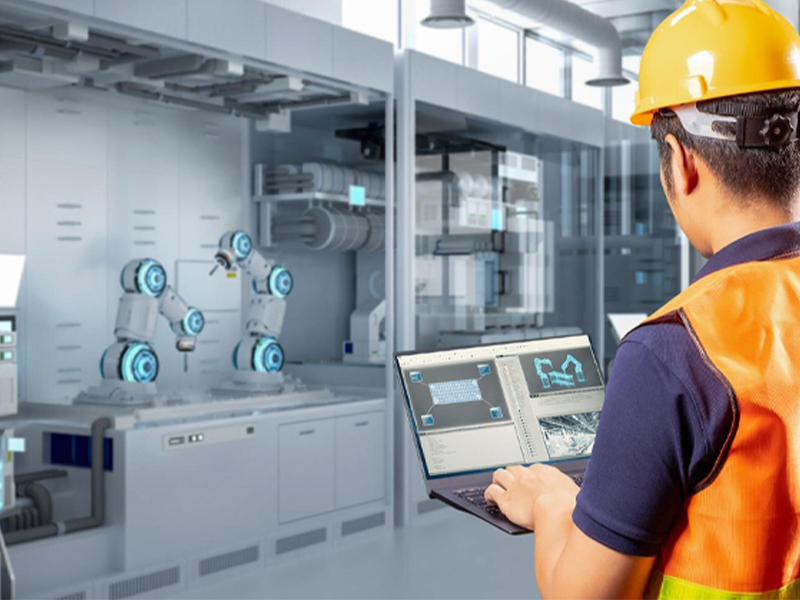
- Traditional AOI has high false positives and limited defect recognition
- AI edge computing with 5G/WiFi enables real-time quality monitoring
- Textile inspection accuracy increased from 30% to 90%
- Wheel rim inspection reduces customer complaints and error costs
- Modular design ensures seamless integration with existing equipment
The Shift Toward Smart Manufacturing
The manufacturing landscape is rapidly evolving toward Industry 4.0 paradigms, where smart manufacturing and automation drive increased efficiency, quality, and flexibility. Automated Optical Inspection (AOI) has long been a critical technology in quality assurance, enabling manufacturers to detect defects early and reduce costly errors. The integration of Artificial Intelligence (AI) into AOI systems marks a transformative leap – empowering manufacturers with faster, more accurate, and adaptive inspection capabilities.
Smart manufacturing leverages digital technologies – IoT, AI, robotics, and advanced analytics – to create highly automated, self-optimizing production environments. Central to this transformation is quality control, which ensures products meet stringent standards while minimizing waste and downtime.
Automated Optical Inspection (AOI) systems traditionally use cameras and rule-based algorithms to detect surface defects, assembly errors, and component misplacements. Although AOI has improved over manual inspection, limitations remain in speed, accuracy, adaptability, and handling complex defect patterns.
Artificial Intelligence, particularly machine learning and deep learning, enhances AOI by enabling systems to learn from vast data sets, adapt to new defect types, and improve accuracy over time. AI-powered AOI transcends simple rule-based detection, delivering smarter, faster, and more scalable inspection processes that align with the dynamic demands of modern manufacturing.
The Challenges of Traditional AOI Systems
- Limited Defect Recognition.
- High False Positive Rates.
- Scalability and Flexibility Constraints.
- Data Utilization Gaps.
The Solution Inventec Provides
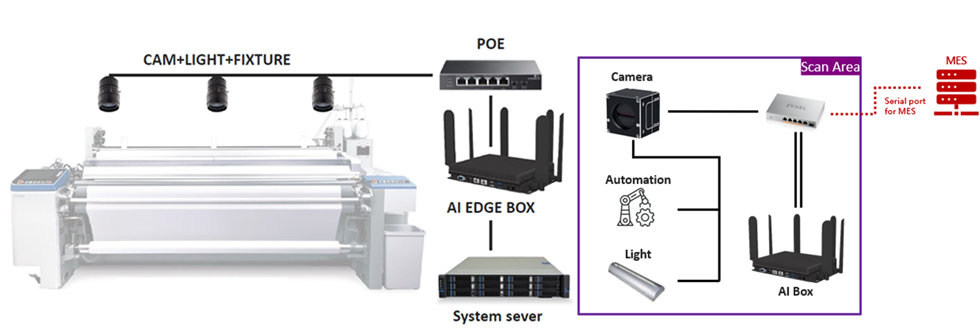
By integrating an AI acceleration card and wireless, LTE/5G and Wifi modules into Intel base edge computing device with cameras, defect detection algorithms and automation system integration, manufacturers can unlock a range of new capabilities – enabling real-time quality monitoring, reducing waste, and empowering data driven decision-making on the shop floor – without a complete infrastructure overhaul.
Customer Case I : Textile Fabrics Category Defect Inspection
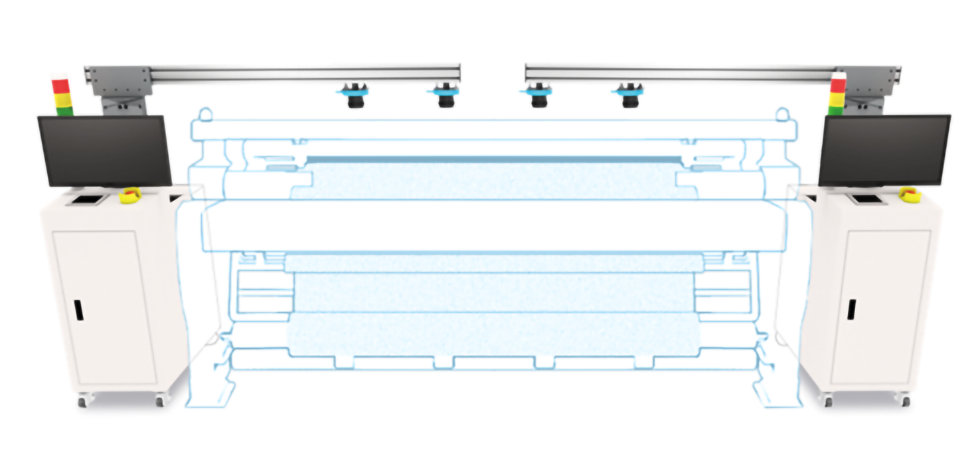
AI models integrated into an edge computing box with cameras and other customized parts can inspect broken yarn,corruption, fluffing and dirt from several textile fabrics category such as electronic glass, Kevlar and carbon fiber.
Benefit :
- Save material waste by stopping conveyors once defects are inspected.
- Improve the efficiency of quality control and prevent human checking drawbacks.
- Save laboring resources by stable quality of inspection.
- Improve detection rate from 30% to 90%.
Customer Case II : Wheel Rim Lettering Inspection
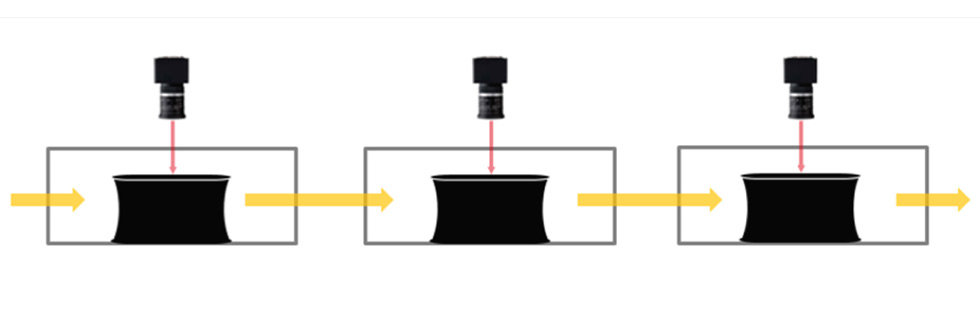
The fully automatic AI-accelerated equipment including an edge computing box, cameras and other customized automation parts is used for inspection of various wheel rim products for some production errors such as wrong lettering, rework mark and valve position.
Benefit :
- Reduce the frequency of customer complaints.
- Lower the cost of production errors.
- Improve comprehensively product quality with misjudgment reduction.
What AI-Enabled AOI Differentiates from Traditional Systems
- Enhanced Accuracy and Defect Detection.
- Reduced False Positives and Increased Throughput.
- Adaptive Learning and Continuous Improvement.
- Data-Driven Insights and Predictive Maintenance.
- Cost Efficiency and ROI.
Why Inventec AI-Enabled AIoT Box System Stands Out
- Enhanced Performance and High Efficiency: Deliver balanced performance (up to 23% gain in single-thread and up to 19% gain in multithread). Offer 1x PCIe Gen4 x4 slot and 2x DDR4 SODIMM slots with in-band ECC.
- Flexible Network Configuration: Provide multiple internal M.2 expansions slots and wireless modules, supporting 4G-LTE or 5G-NR and Wi-Fi modules.
- Satisfactory Stability and Easy Serviceability: Designed with a highly modular architecture in ultrathin form factor and wide operating temperature (-20°C~60°C).
- High-performance AI Inference: Integrate 5G and Wi-Fi connection to ensure stable connection and cooperate with any AI application with HDMI and COM port design for vision display and serial I/O control requirement.
How Inventec Assist Customers to Empower Smart Manufacturing
-
Computational Edge Integration with Existing Systems
What Inventec did for customers is that AI-enhanced AOI is designed to complement and augment current equipment and workflow setups rather than replace them entirely. Successful integration involves a seamless exchange of data, synchronization with production workflows, and compatibility with existing hardware and software.For textile fabrics defect inspection, by working with partners, Inventec developed a movable architecture to fit different textile machinery which has adjustable designs such as automatic lifting height for recognition and interchangeable cameras and light sources for different coverage.
For wheel rim lettering inspection, without changing the production flow, Inventec collaborated with partners to add value to the original automation production process by introducing line scan and area scan inspection into processing, polishing and painting stations.
-
Address Human Shortage and Untimely
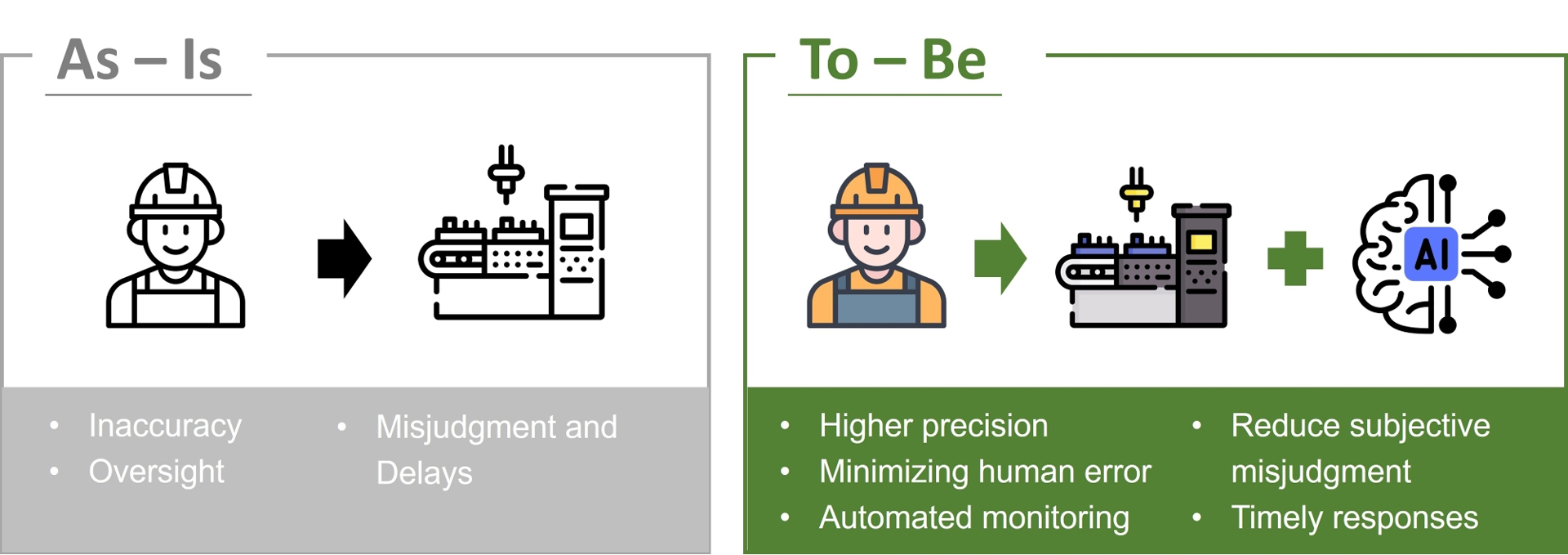
In the traditional manufacturing industry, dedicated personnel are required to patrol and monitor multiple machines, making it difficult to perform thorough and real-time inspections. Additionally, due to varying skill levels among inspectors, the detection rate can differ significantly. As a result, some textile manufacturers choose to inspect the fabric only after it is woven completely. However, if too many defects are found at that stage, the fabric may be downgraded, leading to a lower selling price.
Inventec provided a solution to address challenges such as inaccuracy, oversight, misjudgment and delays. AI-driven analytics and real-time data processing ensure higher precision through advanced pattern recognition, minimizing human error. Automated monitoring helps detect subtle anomalies that are often missed. Intelligent algorithms reduce subjective misjudgment by providing consistent, data-backed insights. Additionally, real-time alerts and decision support tools ensure timely responses, enhancing operational efficiency and reliability.
-
Data Communication Seamlessly Extension
In the future, in order to make the AI-AOI system to be a part of the industrial IoT platforms, which aggregate data from machines, sensors, and inspection stations.
By helping customers build 5G private networks in their factory and providing the function of wireless connection in the device, the system can achieve the goals of wide data connection, low latency, and multiple transmission.
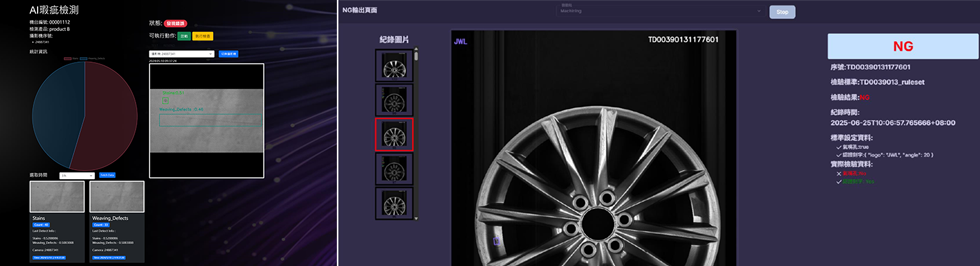
Inventec AI-AOI system provided real-time visual feedback to line operators through an intuitive user interface platform. The backend module not only supports heterogeneous network connection function but also reserves serial port for MES (Manufacturing Execution Systems). Inspection results can be fed into the MES to track quality at every stage of production in the future.
Conclusion
An AI-enabled AOI is not just a technological upgrade – it’s a strategic enabler for transforming traditional manufacturing. It aligns with the goals of quality, efficiency, and sustainability, making it a compelling investment for forward-thinking manufacturers.
To stay competitive in the era of smart manufacturing, traditional manufacturing business must harness the power of AI to modernize their quality assurance processes and unlock new levels of performance. Inventec platform delivers the intelligence, flexibility, and compliance required for tomorrow’s manufacturing industry.